
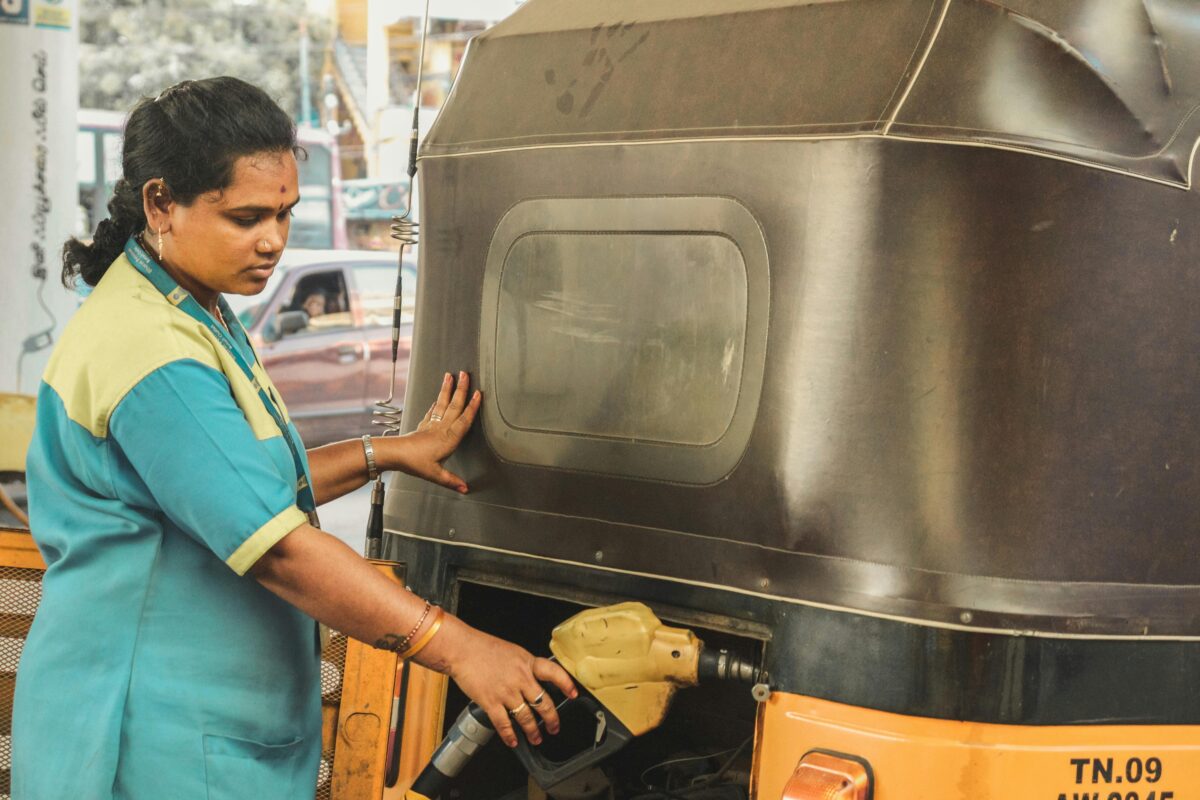
We’re all aware of the current war unfolding in West Asia and the Persian Gulf, and the headlines have been highlighting one thing: how soon will India’s oil supplies dry up? Media reports and analysts offer multiple viewpoints, from what could go wrong, to the measures that are already in place to absorb temporary supply shocks.
But to understand the possible outcomes of the West Asia conflict on India’s fuel supplies, we first need to understand what India’s oil supply chain looks like: where the oil comes from, how it reaches us, and what exactly we consume.
An overview of India’s oil supply chain
India imports close to 90% of its crude oil needs, and is the third-largest importer and consumer of oil in the world — not surprising, given we are a nation of over 1.4 billion people. The supply chai works in five stages, from importing crude oil to reaching consumers.
- Stage 1, crude oil supply and import: India produces some crude oil domestically, but relies heavily on imports. Major crude suppliers include Russia, Iraq, Saudi Arabia, UAE and the USA.
- Stage 2, transportation and storage: This is the stage where crude oil is moved from ports to refineries for storage. This happens via pipelines, coastal tankers and storage terminals forming part of India’s midstream petroleum infrastructure.
- Stage 3, refining: This is the stage where the crude oil is processed into usable fuels for the end-consumer. Refineries across India convert crude oil into petrol, diesel, LPG, and aviation fuel. India has one of the largest crude refining capacities globally, touching 258 MMTPA (million metric tonnes per annum) as of FY25.
- Stage 4, distribution: At this stage the refined fuel is distributed and readied for retail. Petroleum products are distributed through a network of pipelines, depots, LPG bottling plants and tanker transport to retail outlets across the country, handled by major state-owned corporations like Indian Oil, Bharat Petroleum and Hindustan Petroleum.
- Stage 5, retail and consumers: This is the final stage, where fuel reaches consumers. This includes the aviation, transport and agriculture sector, industries, and households. Fuel products are sold to consumers through retail outlets, LPG distributors and city gas networks.
India’s oil supply and consumption by numbers
India imports massive amounts of crude oil, because the consumption downstream is just as massive: from powering freight to household cooking, India relies on petroleum products.
Here’s a breakdown of the numbers.
India imports close to 90% of its crude oil needs. In FY2025-26, India imported about 247.9 million metric tonnes (MMT) of crude oil, as per data from the Petroleum Planning & Analysis Cell (PPAC), Import-Export Statistics table.
→ 1 tonne = approx 7.3 barrels (the unit in which crude oil is measured)
→ 247.9 million tonnes/year = 1.8 billion barrels/year, or 5 million barrels/day
→ 1 barrel = approx 159 litres
→ 5 million barrels/day = 79,49,36,474 litres/day
So in approximate terms, India requires 80 crore litres of crude oil, every single day.
That crude oil is refined into different types of fuel (petrol, diesel, cooking gas etc) and the consumption mix looks something like this:
| Fuel Type | Share of consumption | Use |
| Diesel | 38–39% | Trucks, freight, agriculture |
| Petrol | 15–16% | Cars and two-wheelers |
| LPG (cooking gas) | 12–13% | Household cooking |
| Petroleum coke | 8–9% | Industry (cement, metals) |
| Naptha | 6% | Petrochemicals |
| Aviation turbine fuel/jet fuel | 4% | Aviation |
Source: Ministry of Statistics Publication/Consumption of Energy Resources/FY2022-23
Diesel, petrol, and LPG account roughly 70% of India’s petroleum consumption, and these are fuels the nation cannot function without, which is why a supply disruption can have a negative impact.
How the current Gulf crisis impacts India’s oil supplies
It’s simple: when oil producers/suppliers are struck by war and supply routes are closed, the actual supply comes to a grinding halt. India depends heavily on imported crude oil, and much of it comes from the Gulf region.
Roughly 35–50% of India’s crude imports pass through the Strait of Hormuz, the main shipping route from the Gulf. So if shipping through the strait is disrupted due to the Iran-US conflict, tankers cannot move easily and supplies from Iraq, Saudi Arabia, Kuwait, UAE and Qatar could be delayed — which means a significant disruption to India’s oil supply chain.
Such a disruption could lead to an immediate rise in energy prices, shipping delays, and longer transit times. Higher fuel costs may also create inflationary pressures across sectors, while container shortages and supply-chain backlogs could extend beyond the energy sector and disrupt broader trade flows.
What does this mean for the consumer?
The geopolitical crisis may be concentrated in one region, but the shockwaves finally hit the consumer, since all of us rely on crude on a daily basis in some form or the other: petrol, diesel, cooking oil; and to power agriculture and business.
While consumers may not be hit by a shortage per se (the government maintains Strategic Petroleum Reserves in Visakhapatnam, Mangalore and Padur to manage such supply disruptions), it will show up in the form of higher prices. Cooking gas cylinders are already facing a shortage and may get more expensive, food prices may rise as transport and freight costs increase, and flights and travel may also face a shock as jet fuel prices and ticket prices are raised.
While tensions in the Gulf highlight India’s dependence on imported energy, the nation is better positioned today to manage such shocks than it was a decade ago. Strategic petroleum reserves, commercial fuel inventories, and one of the world’s largest refining systems provide a buffer against short-term supply disruptions. India has also diversified its crude suppliers, importing oil from regions such as Russia, the United States, and West Africa in addition to the Middle East. However, in the short term, till the crisis is resolved, consumers need to brace themselves for higher prices and more shortages.
Sources
Fuelling the future: Why India needs maritime muscle as its oil thirst grows – The Economic Times
Union Budget 2026-27 Analysis : Petroleum and Natural Gas
Oil & Gas Industry in India | Sector Insights & Trends
India’s Oil Import Dependence Climbs to Nearly 89% as Domestic Output Lags | OilPrice.com
India’s Strategic Petroleum Reserves
Global oil traders keen on India’s strategic crude reserves