
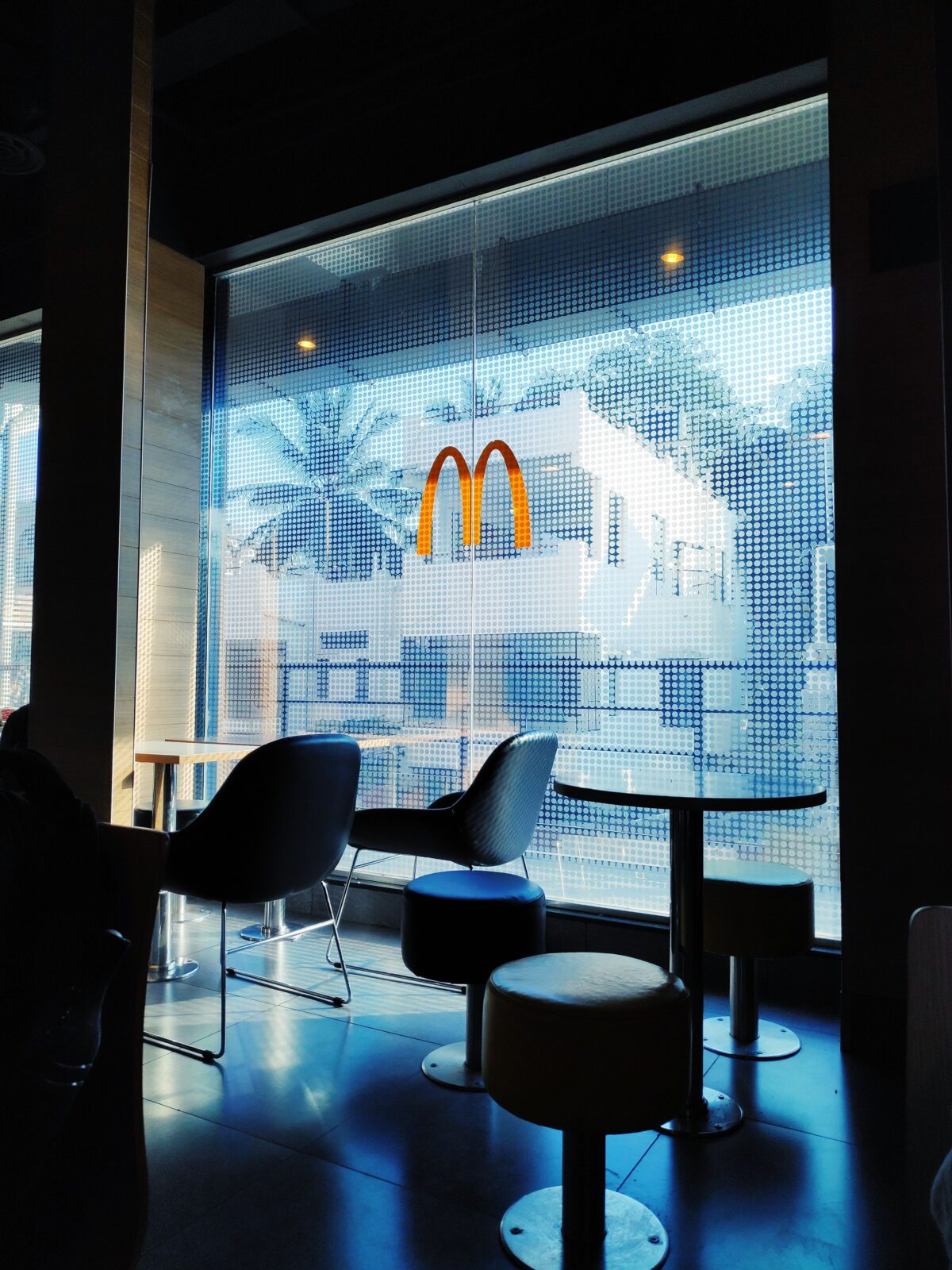
Indians are eating out more. The QSR (Quick Service Restaurant) industry has seen rapid expansion in the last 5 years post-COVID, albeit in an uneven manner. Some of the reasons for this growth include urbanisation, rising disposable incomes, changing eating habits, convenience and the formalisation of India’s food-services market. (Quick service restaurants are those that prioritise speed of service, affordability, and convenience; with a limited menu and a strong focus on takeaway, delivery, and minimal table service.)
ICRA’s (Information and Credit Rating Agency) industry analysis that covers five major listed domestic QSR operators shows that aggregate industry revenue grew 54% in FY22 and 33% in FY23, helped by post-COVID demand recovery, the increased use of food-delivery platforms, and technology-enabled ordering.
However, in FY2025, the pace slowed down: ICRA estimates that industry revenue grew around 10% in FY25, with store additions continuing to drive growth even as same-store sales remained under pressure. For FY26 and FY27, ICRA expects revenue growth of 10–12% and 12–14% respectively.
Most of the companies that operate these QSRs happen to be smallcaps, controlling most of the popular franchises and outlets across urban India. So is there a longer-term growth opportunity in this space? Here’s what the numbers say.
The five year trajectory
The Indian QSR sector has seen some sharp movements in the last 5 years.
- The fall: COVID restrictions and lockdowns saw a sharp decline in revenue. ICRA’s report estimates a 24% decline in FY21, which severely impacted the dine-in business. Average daily sales fell to ₹89,162 to ₹67,479 in FY20.
- The recovery: The recovery, however, was rapid. The recovery was rapid. In FY22, revenue grew 54% and in FY23, by 33%. Average daily sales recovered to around ₹95,000 in FY23 from ₹88,000 in FY22. Revenue grew not just because of stores reopening after lockdown, but also thanks to the adoption delivery apps and tech-enabled ordering.
- The moderation and correction: After the immediate rise post-COVID, the industry entered a phase of moderation and correction. Revenue slowed to around 9% in FY24 and 10% in FY25, according to ICRA. What’s interesting is that during this period, QSR operators continued expanding and adding new stores (around 705–715 stores were added in FY24 and FY25, compared with around 793 in FY23), without an increase in revenue. The latest ICRA assessment further highlights the contrast. Revenue grew 10% in FY25 and 11% in H1 FY26, driven by new store additions — but same-store sales growth remained negative because of subdued consumer demand and intense competition.
- Potential growth ahead: However, there’s still room for growth. An analysis from Technopak, cited in Restaurant Brands Asia’s 2024-25 annual report, states that India’s organised QSR segment is growing rapidly, with 100+ brands operating 8,500+ outlets nationwide. The report put India’s organised QSR market at ₹649 billion in FY24, with chain QSRs accounting for about 58% of the market, projected to touch approximately ₹1,476 billion by FY29.
So it’s quite possible that the next leg of growth may depend less on adding more outlets, but rather, on getting existing stores to generate more revenue. Here is a closer look at the 4 main small cap QSR chains that control a major chunk of this segment.
In focus: Devyani International
Devyani International is one of India’s largest QSR operators and the largest franchisee of Yum! Brands in India.
- What they do and chains they operate: Devyani operates KFC, Pizza Hut and Costa Coffee in India, alongside its own Indian concepts including Vaango and Food Street. It also operates KFC restaurants in Thailand and has businesses in other international markets. As of March 31, 2025, the company had 2,039 stores globally. Its core Indian portfolio comprised 696 KFC restaurants, 630 Pizza Hut outlets and 220 Costa Coffee cafés. KFC remains the biggest part of the Indian business. During FY25, Devyani added 100 KFC stores, taking the India KFC network to 696. KFC India generated ₹2,179 crore of revenue in FY25, up 6.6% year-on-year.
- What makes them worth keeping an eye on: Devyani has a combination of scale, multiple international brands and continued store expansion. KFC remains the key growth engine, while Costa Coffee provides exposure to India’s rapidly expanding café market. The key issue to watch is whether continued store additions can translate into stronger productivity.
In focus: Westlife Foodworld
Westlife Foodworld operates McDonald’s restaurants across West and South India through its wholly owned subsidiary Hardcastle Restaurants.
- What they do and chains they operate: Unlike Devyani which has multiple brands under its umbrella, Westlife’s business is almost entirely centred around McDonald’s. Its subsidiary Hardcastle Restaurants holds the franchise rights across West and South India. As of March 31, 2025, Hardcastle operated 438 McDonald’s restaurants across 69 cities, serving more than 200 million customers annually and employing more than 10,000 people. The network includes multiple formats, including standalone restaurants, drive-thrus, McCafé, 24×7 restaurants, McDelivery, McBreakfast and dessert kiosks.
- What makes them worth keeping an eye on: While margins declined in FY25, the company still opened a record 47 restaurants in FY25, taking its network to 438 outlets. There has also been a spike in digital sales: Westlife reported that digital sales contributed 75% of total sales in Q4 FY25.
In focus: Restaurant Brands Asia
Restaurant Brands Asia is the exclusive master franchisee of Burger King in India and operates Burger King and Popeyes in Indonesia.
- What they do and chains they operate: RBA operates Burger King in India, while its Indonesian subsidiaries operate Burger King and Popeyes. It also offers beverages and snacks through the BK Café format. The company has expanded rapidly since opening its first Burger King restaurant in India. By FY25, it had scaled to more than 513 restaurants in India and 464 BK Cafes.
- What makes them worth keeping an eye on: In one word, growth. The company has been expanding rapidly, adding around 60–80 stores annually over the past three years. ICRA says revenue grew at a 20% CAGR between FY22 and FY25, while in 9M FY2026, the company’s revenue grew by 10% on a YoY basis. But whether that growth will convert to profitability remains to be seen.
Serving up more growth?
The first phase of India’s QSR story was about reopening restaurants and capturing pent-up demand. The second was about rapidly adding stores and taking global brands deeper into India’s cities and emerging markets. The next phase could be more interesting — and more demanding. The winners may not necessarily be the companies that open the most restaurants. They could be the ones that find the right locations, increase customer frequency, improve sales per store and extract operating leverage as their networks mature.
References
https://www.icra.in/Rating/DownloadResearchSummaryReport/4994?utm_
https://www.icra.in/Rating/DownloadResearchSummaryReport/6275?utm_
https://nsearchives.nseindia.com/annual_reports/AR_27143_RBA_2024_2025_A_28072025194810.pdf?utm_
https://www.bseindia.com/xml-data/corpfiling/AttachHis/7b4b10a0-d5b7-484f-a0b4-d578df094e3b.pdf?utm_