
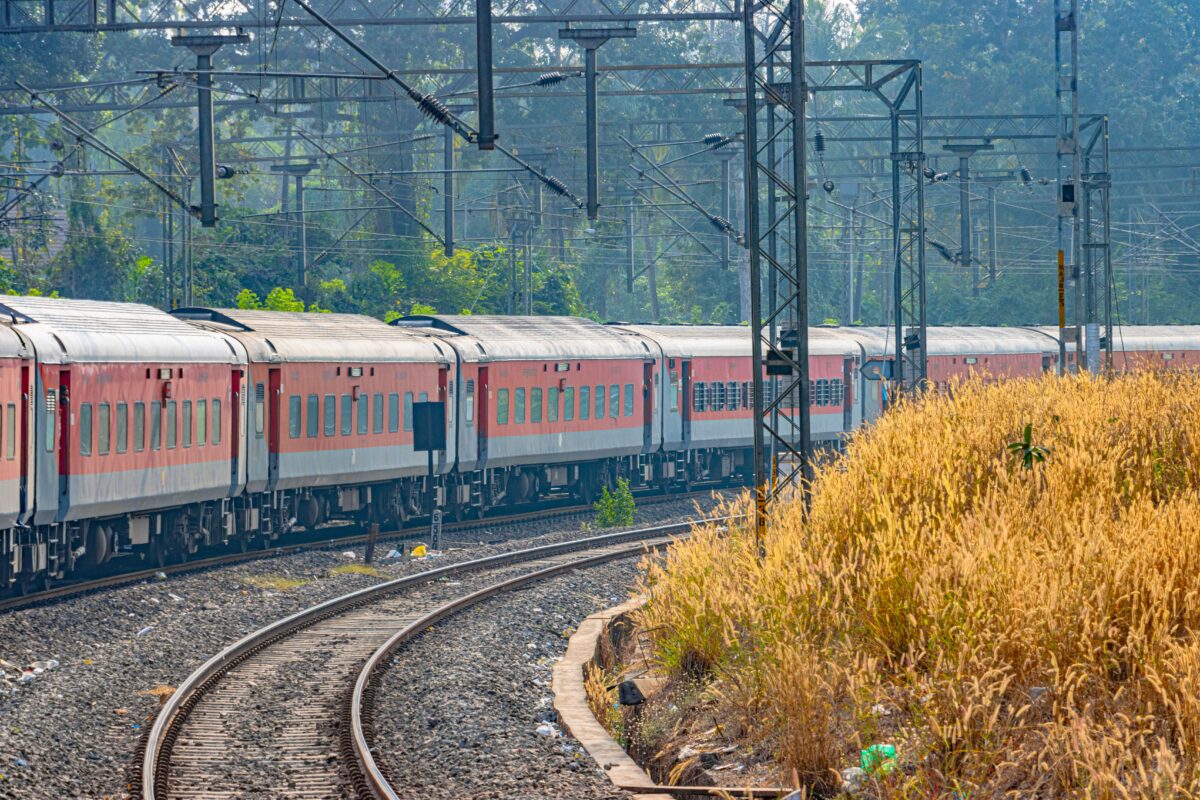
The Indian Railways is getting ready to begin operations at its new rail manufacturing facility in Kazipet, Telangana. The Kazipet rail manufacturing unit is expected to produce 200 intercity trains over the next five years.
Designed to be short-distance commuter trains, they will run roughly 300 kilometres, connecting neighbouring cities and towns for daily commuting, education, healthcare, and work needs. The trains will run at a maximum speed of 130 kmph, with a 20-coach configuration. According to the Railway Ministry, the trains will feature automatic doors, advanced bogies, modern couplers, regenerative braking systems and energy-efficient electrical equipment.
While the Kazipet facility is set to become a major manufacturing hub, there is likely to be a downstream effect for railway ancillaries. Every train requires suppliers providing coaches, forged components, braking systems, electrical and safety equipment, propulsion technologies and railway electronics. As passenger rail investment grows, several smallcap rail and rail-ancillary companies could find themselves positioned to participate in the broader manufacturing ecosystem.
Understanding the potential beneficiaries
The Kazipet project is primarily a rolling stock manufacturing initiative rather than a railway track or civil infrastructure project. As a result, the companies most likely to benefit fall into three broad categories.
- Rolling stock and coach makers: These companies manufacture railway coaches, wagons, train bodies and other rolling stock. They are often the first beneficiaries when train production ramps up. (Rolling stock refers to any railway vehicle that moves on a track, including passenger coaches, freight wagons, locomotives etc.)
- Railway components and ancillary suppliers: This segment includes manufacturers of bogies, couplers, castings, forgings, braking systems and safety equipment. They supply critical parts used in train assembly.
- Electrical and propulsion ecosystem: Modern train sets increasingly rely on sophisticated electrical systems, traction equipment and regenerative braking technologies. Companies operating in this segment provide the systems that enable trains to run efficiently and safely.
Rolling stock and coach manufacturing beneficiaries
The most direct beneficiaries of increased train production are companies involved in manufacturing rolling stock, including passenger coaches, train bodies and rail vehicles.
Titagarh Rail Systems
- Potential impact: High
- Core strengths: Titagarh Rail Systems is among India’s leading manufacturers of railway coaches, metro cars, EMUs and passenger rolling stock.
- Why it could benefit: As India expands passenger rail capacity and increases train production, demand for coach manufacturing expertise, fabrication capabilities and railway engineering solutions may rise. Companies already embedded in the rolling stock ecosystem could be well-positioned to participate in future opportunities.
Jupiter Wagons
- Potential impact: High
- Core strengths: Traditionally known for freight wagons, Jupiter Wagons has expanded into wheelsets, braking systems and other railway equipment.
- Why it could benefit: The company’s growing presence in railway components and manufacturing makes it a potential stakeholder in the broader supply chain as train production increases.
Texmaco Rail and Engineering
- Potential impact: High
- Core strength: Texmaco manufactures wagons and provides engineering solutions for railway infrastructure and rolling stock.
- Why it could benefit: An increase in manufacturing activity across the rail ecosystem could create opportunities for fabrication, engineering and component supply contracts.
Components and ancillary suppliers
Beyond rolling stock manufacturers, a large ecosystem of component suppliers plays a critical role in rail production. These companies provide essential parts like bogies, couplers, forgings, signalling systems and safety technologies.
Ramkrishna Forgings
- Potential impact: High
- Core strength: Ramkrishna Forgings manufactures forged components used in bogies, couplers, axle assemblies and railway applications.
- Why it could benefit: The Kazipet trains are expected to feature advanced bogies and modern coupler systems as listed in the press release. As production volumes rise, demand for specialised forged components could increase.
HBL Engineering
- Potential impact: High
- Core strength: HBL Engineering supplies signalling systems, communication equipment, train protection technologies and railway electronics.
- Why it could benefit: Passenger rail services often require additional safety, signalling and communication infrastructure alongside new train deployments. As more passenger trains are deployed, the demand for these systems may rise in parallel.
Kernex Microsystems
- Potential impact: Medium-high
- Core strength: Kernex focuses on railway safety solutions, including collision avoidance and signalling technologies. Earlier this year, the company secured major railway safety contracts for the deployment of India’s indigenous train protection system, Kavach.
- Why it could benefit: As passenger services expand and train frequency increases, railway operators may invest further in safety technologies and network modernisation.
Electrical and propulsion systems
Modern trains rely on advanced electrical and propulsion technologies to improve efficiency, safety and passenger comfort. The Kazipet trains are expected to incorporate specialised features that rely on these technologies.
Hind Rectifiers
- Potential impact: Medium-high
- Core strengths: Hind Rectifiers manufactures transformers, rectifiers, converters and power systems used in railway applications.
- Why it could benefit: Energy-efficient trains require sophisticated power electronics and electrical conversion systems, creating potential opportunities for specialised suppliers.
A broader theme beyond coaches
The Kazipet rail manufacturing unit represents more than just another railway factory: it reflects the Indian Railways’ continued focus on expanding passenger rail capacity through modern, energy-efficient trains designed for better regional connectivity.
While it’s too early to identify direct order beneficiaries, the Kazipet facility highlights a wider investment theme emerging across the railway ecosystem. From coach manufacturers and forging specialists to signalling providers and propulsion equipment makers, a growing network of rail ancillaries stands to benefit if passenger rolling stock investments continue to accelerate.
Sources
Top Railway Companies in India – Leading the Infrastructure Revolution
Titagarh Rail Systems Ltd share price
Jupiter Wagons Ltd share price
Texmaco Rail & Engineering Ltd share price
Ramkrishna Forgings Ltd share price
HBL Engineering Ltd share price
Kernex Microsystems (India) Ltd share price | About Kernex Microsys. | Key Insights – Screener