
What truly sets a small-cap company apart from its mid- and large-cap counterparts isn’t just scale, it’s sustained outperformance. Since market capitalisation thresholds evolve with broader market movements, a company must consistently outpace its peers to ascend the ranks. Steady growth isn’t enough.
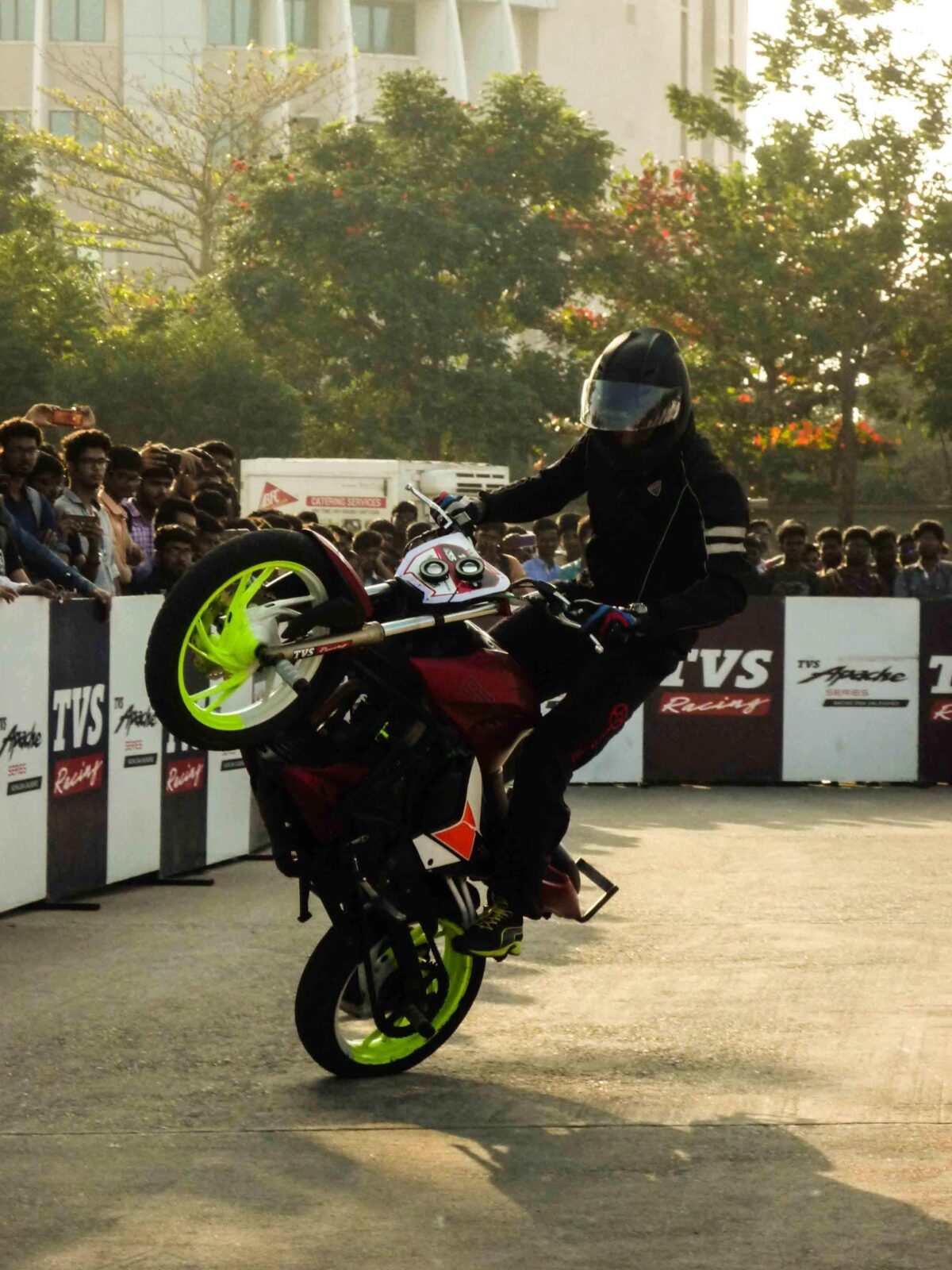
Many of today’s blue-chip firms started out as small caps, gradually rising through a combination of smart strategy, strong execution, and industry leadership. This week, we spotlight one such success story: TVS Motors. With a legacy spanning over a century, it has grown to become one of India’s largest two-wheeler companies — an impressive climb from modest beginnings.
How it started
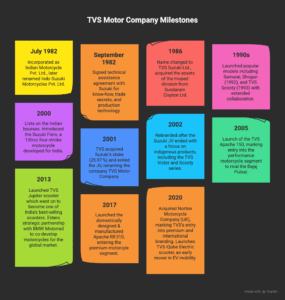
TVS Motor Company traces its origins to the TVS Group, a transport venture founded by T. V. Sundram Iyengar in 1911 with Tamil Nadu’s first bus service. Over decades it diversified into automotive parts and transport services.
TVS Motor Company Ltd. was established in 1978 as a division of the TVS Group. It began as a joint venture between Sundaram Clayton Ltd and Suzuki Motor Corporation, operating and manufacturing motorcycles under the name Indo Suzuki Motorcycles Pvt. Ltd. After parting ways with Suzuki in 2001, TVS launched its independent models, quickly establishing itself as a leader in the two-wheeler segment, expanding its range of scooter, mopeds and three-wheelers.
Key growth drivers and success factors
The success of TVS can be attributed to a committed focus on quality, in-house product development, and well-planned expansion and diversification.
- Quality and operational excellence: Venu Srinivasan, Chairman Emeritus of TVS, adopted TQM or Total Quality Management in the late 1980s, during a period when the company was dealing with labour issues and mounting losses. Adopting TQM helped stage a turnaround by driving dramatic improvements in productivity, quality, higher volumes, profits and turnover, customer satisfaction and a stronger competitive position. Srinivasan was conferred the prestigious Deming award for his contribution to the field of total quality management, becoming the first Indian industrialist to do so.
- Indigenous product development: After the split from Suzuki in 2000, TVS launched the TVS Victor, one of the first fully Indian-developed four‑stroke commuter motorcycles that established its footing in the mass segment. Later successful indigenous launches like the Scooty, Jupiter and Apache motorcycle broadened TVS appeal across the commuter/scooter and performance bike segments. The Apache in particular helped TVS get a foothold into the sports motorcycle segment.
- Diversification and premiumisation: TVS shifted their focus to the premium segment and moved away from low-end models. The decision to focus on high-margin scooters like Jupiter/NTorq and premium motorcycles like the Apache series, served consumer premiumisation trends and helped TVS attain better unit profitability.
- EV transition: TVS was an early mover in the EV mobility space, launched its first electric scooter iQube in 2020 and rapidly scaled EV volumes despite initial setbacks. Chairman Emeritus Venu Srinivasan son Sudarshan Venu took charge as Managing Director of TVS Motor in 2022, and steered the company through the aftermath of the pandemic with a sharp focus on getting back to profitability and expanding into newer markets and segments.
Between calendar year 2022 (CY22) and CY24, TVS Motor’s electric two-wheeler sales surged, from 47,182 units to 2.21 lakh units. By CY24, the company had captured a 19% share of India’s electric two-wheeler market. Building on the success of the iQube, TVS began deliveries of its second electric scooter, the premium TVS X, and is preparing to launch an additional variant to further expand its EV portfolio.
TVS Motors today – and beyond
Over the years, TVS has diversified its product ranges to meet a wide audience’s needs, building a firm presence in over 80 domestic and international markets. Today, TVS is a prominent player in the two-wheeler industry and uniquely positioned as the only company with a presence across all three segments — motorcycles, scooters, and mopeds — serving both domestic and international markets.
TVS Motor’s journey from a small cap joint‑venture with Suzuki to a large cap heavyweight has been built on decades of focusing on quality, product innovation, leadership continuity, and diversification. Its consistent climb in market capitalisation, from a smallcap in the 2000s to over $15 billion today, reflects both underlying business growth and investor confidence.
As the company embarks on the next leg of growth with a focus on R&D, global expansion and scaling the EV segment, it looks poised to sustain its upward momentum.
Sources
BikeWale: TVS Apache RR 310 First Ride Review
MoneyControl: TVS Motor Company Ltd History
The Hindu BusinessLine: TVS Motor Buys Norton
Autocarpro: TVS iQube e-scooter turns four, sales cross 250,000 units, last 100,000 in 6 months
The Hindu: TVS Motor’s Srinivasan gets Deming award
Racing Ahead: The Story of Total Quality Management in The Indian Two-Wheeler Sector
MarketInsiders: TVS Motor Company