
Here’s an interesting statistic: in 2024, 12 billion metric tonnes of goods were loaded for international trade worldwide. And in 2026, we can make an educated guess that the number has only grown. Before products reach us as consumers, they are subject to a long journey in the supply chain. They are wrapped, packed, put into boxes, put into trucks, stored in warehouses, re-loaded onto other vehicles, and make their way to us via multiple hubs and modes of transport.
At each stage of handling, boxes need to be loaded, placed in hold, and unloaded. And boxes — especially large, heavy ones — can’t be moved by hand. This is where pallets come in. They make moving goods easy and quick, and almost every business that ships goods will require the use of pallets at some point in the supply chain.
What is a pallet?
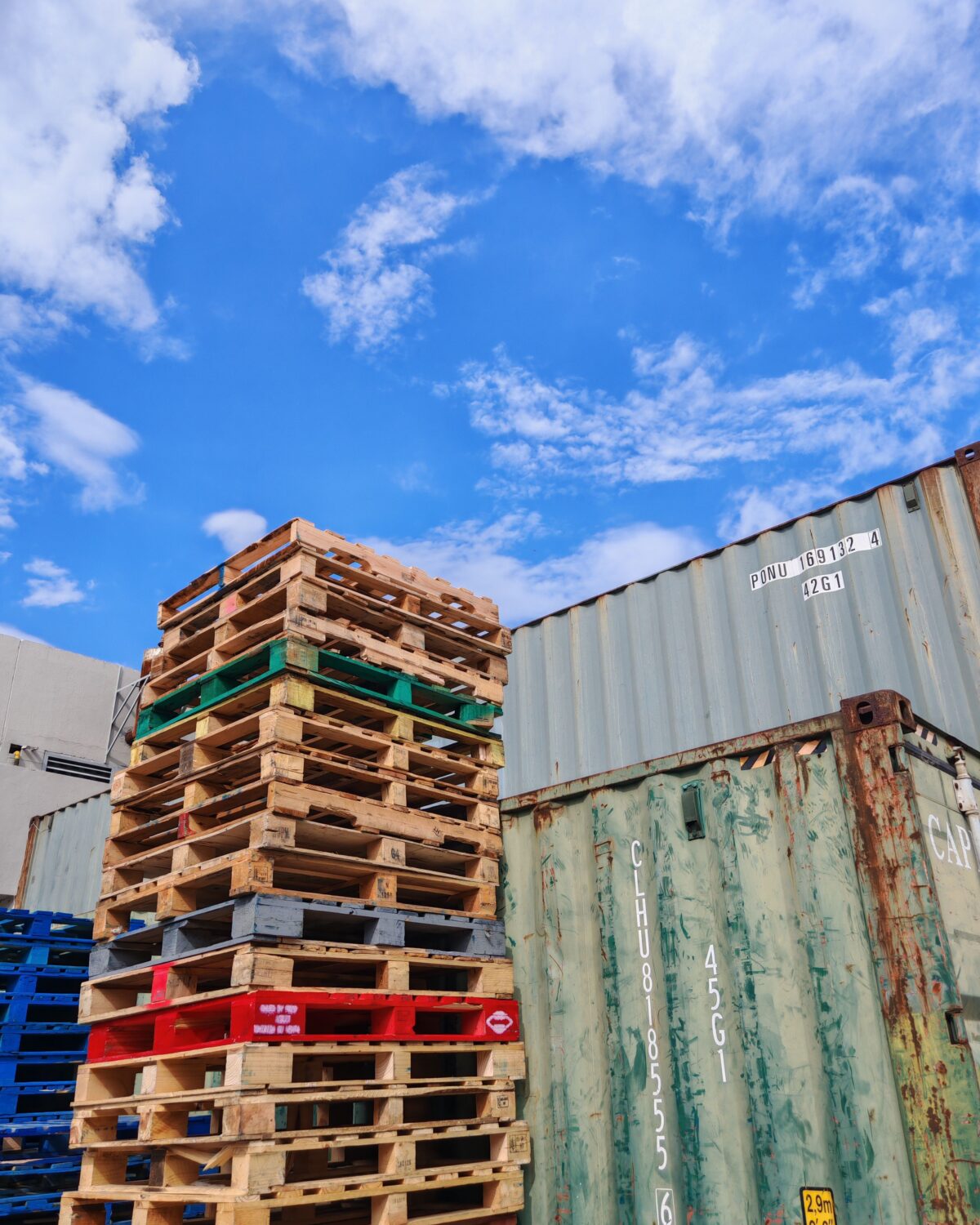
A pallet is a flat, portable platform that is made from wood or plastic that is used to stack, store and move heavy goods across the supply chain safely, with the help of a forklift or pallet jack. Pallets are designed to be picked up using forklifts, pallet jacks, and front loaders, which slide their forks into the slats beneath the base deck to lift and move goods. Pallets make it much easier to transport multiple large and heavy items as a single load instead of relying on manual handling — which is why they are a standard tool used in warehouses, distribution centres, and manufacturing units. Think of the pallet as the foundation (no pun intended) of supply chains, allowing large quantities of boxes to be moved together.
How pallets are used across the supply chain
Pallets move along with goods at multiple points in the supply chain. At the manufacturer level, products are grouped and placed onto pallets so they can be moved mechanically using forklifts and pallet trucks. In warehouses, pallets provide standardised units that can be stored in racking systems and moved using material-handling systems; ISO 6780 sets standardised dimensions and tolerances designed to work with forklifts, pallet trucks and other handling equipment. During transportation, an entire pallet can be moved as a single load, while at distribution centres its label can be scanned to record receipt, storage, loading and onward movement. And finally, at the retailer’s end, palletised goods can be moved from a receiving area into storage or directly into a store or point of use, reducing manual handling.
How pallets make logistics and supply chain operations smooth
There are several reasons why pallets are used at almost every stage in the chain.
- From multiple loads to a single load: Without pallets, thousands of cartons, bags or packages have to be handled individually. A pallet allows those boxes to be packed, stacked, and consolidated into a single unit that can be moved mechanically. This is one of the basic principles of modern material handling: move a single load instead of moving a single item.
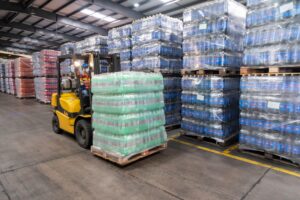
- Reduces loading time: Moving boxes one by one can be time-consuming and physically exhausting. Forklifts and pallet trucks can move an entire pallet or load in one go, rather than having individual packages handled separately. This helps reduce the amount of manual handling involved in loading, unloading and internal warehouse movements.
- Reduces manual handling: When products exchange multiple hands over and over again, the likelihood of damage is always higher. Keeping products together on a pallet means that an entire load can be moved without repeatedly handling every individual carton. This helps ensure products are packed and stored well, and move from one point to the other through the same secure system.
- Warehouse efficiency: Palletisation allows goods to be stored as organised, standardised units using pallet racking, forklifts, pallet trucks, conveyors, automated storage systems and even robotic handling systems. This level of standardisation is important as warehouses become increasingly automated.
- Faster movement of goods: A palletised load can move through multiple stages without being disturbed: Factory → Warehouse → Distribution Centre → Truck → Retailer. Instead of unloading and reloading individual boxes at every stage, the logistics unit can often be moved as a whole, cutting down transit time.
- Standardisation across the supply chain network: ISO 6780 outlines principal dimensions and weight tolerances for flat pallets and specifically addresses how they are handled by pallet trucks, forklifts and other equipment. Pallets are designed to these dimensions which impact warehouse racking, forklift design, truck loading, storage density, conveyor systems and automated material handling. Standardisation makes the entire handling process faster because the equipment and infrastructure around it has been designed to work along with it, sans adjustments.
Pallets introduce standardisation and reduce manual handling in the same way shipping containers do. Before containerisation, cargo movement by sea was handled as individual bags, boxes, barrels and crates. Dockworkers had to unload these pieces from trucks, move them to the ship, load them into the vessel, and repeat the process when the ship arrived. It was labour-intensive, slow, prone to damage and theft, and made switching between road, rail and sea cumbersome. Containerisation effectively created a common physical interface between road, rail and sea, in the way pallets create a common physical interface between factories, warehouses, transport, and distribution centres.
Pallets: A logistics unit that moves through the supply chain
One of the most important aspects of modern palletisation is that the pallet can function as an entire logistics unit that can be tracked through the supply chain. Standards organisation GS1 defines a logistics unit as a combination of trade units or other objects assembled for transportation or warehousing, including goods placed on a pallet. And these units can be individually identified using an SSCC (Serial Shipping Container Code). This enables tracking and connects with automated systems, making the pallets a physical building block of the supply chain.
This is why as logistics networks become larger, faster and more automated, the ability to move goods quickly, safely, consistently and with minimal manual intervention becomes increasingly important. That is why the pallet is not simply a piece of packaging or warehouse equipment. It is an integral part of the infrastructure that allows modern logistics systems to function.
References
What Is a Pallet? Types, Materials & Standard Sizes | SJF