
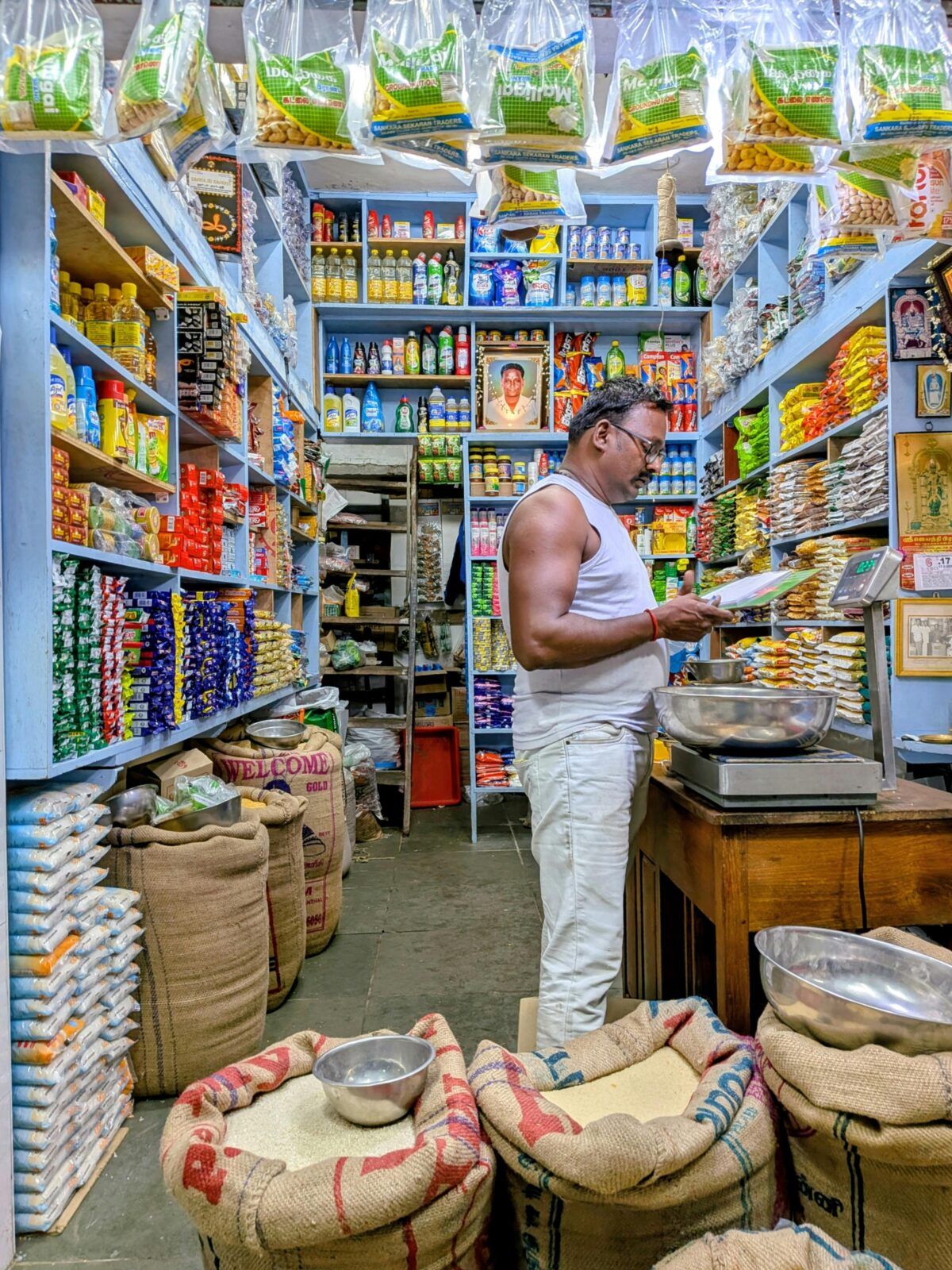
For decades, India’s packaged food and beverage market has been dominated by the likes of ITC, Britannia, Nestlé India and PepsiCo, the kind of giants with nationwide distribution networks and massive marketing budgets. Smaller food and beverage manufacturers, in contrast, tended to remain regional businesses, limited to one state or a handful.
But over the last decade and a half, a few regional players have managed to break out of this mould and have scaled up to serve shelves, kitchens and restaurants nationwide. One common thread? They are all smallcap companies, and they all leveraged changing consumer preferences and span-India supply chains and better distribution to capture the national market.
India’s consumer food and beverage landscape
Until the early 2000s, India’s organised packaged food sector was largely controlled by large FMCG firms with nationwide distribution. Companies like ITC and Britannia built extensive retail networks that allowed them to reach millions of neighbourhood stores across the country. MNCs like Nestlé India and PepsiCo also relied on decades-old distribution systems to dominate categories like noodles, chocolates, chips and beverages.
Regional food manufacturers typically lacked this reach. Many operated as local brands serving a few states where they had strong distributor relationships or manufacturing bases. As a result, while India’s food market was diverse, the organised packaged segment was heavily concentrated among a small number of national players.
How the landscape began to change
Over the past decade, several structural changes have made it easier for regional brands to expand nationally.
- Scalable distribution networks: Over time, distribution networks became easier to scale. Better transport and logistics infrastructure and the emergence of organised logistics and distributor networks allowed smaller companies to expand beyond their home markets. Many companies also invested in multi-plant manufacturing networks to reduce transportation costs and ensure fresher supply.
- Modern retail and expansion of institutional demand: The growth of supermarkets, QSR (quick-service restaurant) chains and institutional buyers opened up new distribution channels for food and beverage consumer companies. Food service companies, airlines and railway catering networks tend to require large-scale suppliers for packaged foods and bakery products, creating opportunities for smaller regional players.
- Regional taste preferences and niches: India has a vast food culture, and many of the flavours and foods are highly regional. As incomes rose and urban consumers became more willing to experiment with different cuisines and flavours, foods once associated with specific regions started finding acceptance nationwide. This created an opportunity for regional brands to introduce their products to new markets while retaining the authenticity that made them successful locally. Local brands often have a strong understanding of consumer preferences in their core markets, allowing them to build loyal customer bases before expanding into other regions. Snack and namkeen manufacturers and bakery companies used this advantage to gradually extend their footprint across India.
Three companies in India have managed to leverage these changes to expand their footprint nationally: Mrs Bectors, a bakery food company launched from a home kitchen in Punjab, namkeen makers Pratap Snacks from Indore, and Nashik-based Sula Vineyards, India’s wine pioneers.
Mrs Bectors Food Specialties (market cap 5567 cr as of publishing date)
Founded in Ludhiana by Mrs Rajni Bector, the company began as a small home baking business before evolving into a large packaged foods company.
- Brands and products: Today, the company owns and operates two flagship consumer brands: Cremica, that manufactures biscuits, cream biscuits, cookies, and crackers; as well as English Oven, that makes, breads, buns, pizza bases, cakes and other bakery products.
- How they grew: The company’s expansion from a home kitchen bakery to a pan-India baked goods brand has been driven by a combination of retail expansion and key institutional partnerships. The Cremica biscuits brand is distributed through a network of hundreds of distributors and over 458,000 retail outlets across India. The company also exports products to more than 60 countries. One of Mrs Bector’s USPs is their presence in India’s QSR food supply chain. They are one of the largest suppliers of burger buns to several fast food chains in India, including McDonald’s and Burger King. This institutional demand has helped the company scale production while building brand recognition in retail markets.
Prataap Snacks (market cap 2249 cr as of publishing date)
Indore-based Prataap Snacks manufactures a wide range of chips, namkeen, and snacks, supplying to grocery stores big and small.
- Brands and products: The company makes snack foods like potato chips, traditional Indian namkeen and extruded snacks (puffed food items made from starchy foods like corn, rice or potato) under the Yellow Diamond label and sweet snacks under the Rich Feast brand.
- How they grew: Prataap Snacks, best known for its Yellow Diamond brand of chips, competes directly with FMCG giants like PepsiCo (Lay’s chips) and other snack brands in a market that’s still largely dominated by local, unorganised vendors. Their strategy has focused on mass-market affordability with deep distribution and significant manufacturing scale. The Yellow Diamond brand of snacks is sold through neighbourhood grocery stores across India, with the company reportedly selling over 12 million savoury snack packets daily, many priced at ₹5 or less. The company also operates 16 manufacturing facilities and a distribution network with thousands of distributors, allowing the brand to expand beyond Central India.
Sula Vineyards (market cap 1310 cr)
Founded in 1999 by Rajeev Samant in Nashik, Maharashtra, Sula was among the pioneers of India’s modern wine industry.
- Brands and products: The company today has a number of wine labels available at different price points, including Sula, Dindori Reserve, Rasa, The Source, Sula Classics as well as canned wine. They also operate vineyard resorts and tasting rooms.
- How they grew: While the previous two companies operate in mass-market packaged foods, Sula Vineyards represents a different model: category creation. Unlike packaged food companies, wine production is geographically concentrated due to agricultural requirements and most of Sula’s production takes place around Nashik, India’s leading grape and wine-growing region. The company has built a national distribution presence across multiple states while also expanding into experiential offerings like wine tourism and events, which has contributed to its business growth. As of 2026, close to 90% of its revenue still comes from sales of its own wine brands, with wine tourism and wine imports making up the rest.
A broader shift
India’s consumer market has historically been dominated by a few FMCG giants, but the rise of companies such as Mrs. Bectors Food Specialities, Prataap Snacks, and Sula Vineyards illustrates a broader shift. These firms began as regional businesses but leveraged expanding distribution networks, modern retail channels and evolving consumer preferences to scale up to reach consumers at a national level. And as India’s FMCG market continues to grow, more regional brands may attempt similar expansions.
Sources
India Packaged Food Market Outlook to 2030
Thriving FMCG Industry in India Driving Its Sales – IBEF
The state of grocery retail in India
The Rise of Regional Flavours in Fast-Food Menus in India
Urbanization and food consumption in India
Mrs. Bectors Food Specialities IPO: Information Analysis
India’s Got Retail: A Tale of Fragmented Supply & Consolidating Distribution
All you need to know about Mrs Bectors Food Specialties Ltd IPO
India competition regulator approves majority takeover of Prataap Snacks
India’s competition watchdog approves majority stake sale in Prataap Snacks
PRATAAP SNACKS LIMITED – 9M FY18
Indian winemaker Sula’s profit slumps as urban consumers cut back
Mrs Bectors Food Specialities Ltd share price
Prataap Snacks Ltd share price
Sula Vineyards Ltd share price