
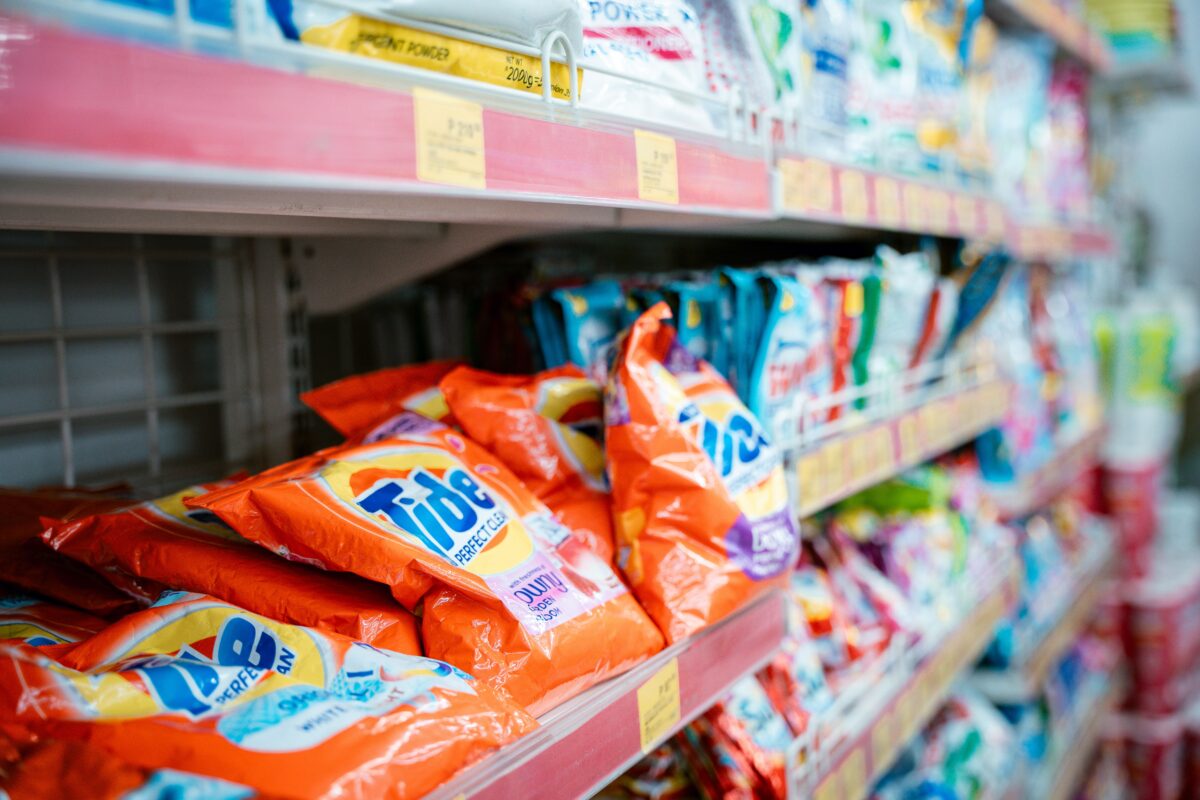
A recent report in the Economic Times highlights how Indian consumers are now purchasing smaller packs of daily essentials as inflation rises and household budgets get tighter. For consumers, smaller packs are a way to manage spending without giving up familiar brands and essential household goods. For FMCG companies, smaller pack sizes are an opportunity to provide and maintain accessible price points. (The ET article states that while the initial price hikes were concentrated in larger packs due to the current geopolitical situation, brands have now begun reducing grammage within smaller packs to avoid altering popular price points of ₹5, ₹10, and ₹20.)
While consumers get the benefit of not giving up their favourite products, there could be another beneficiary of this shift: the packaging industry.
The small pack economy
Small packs have long been a feature of India’s FMCG market. Sachets and low-priced packs allow consumers to buy products in quantities that fit their immediate budgets, rather than committing to larger purchases. As costs rise and household spending comes under pressure, this format becomes even more relevant.
The ET report notes that sales of small packs have been growing 4–10 percentage points faster than larger packs since April 2026. Packs priced at ₹5-₹20 account for a significant share of sales across several categories. Britannia, for instance, says ₹5 and ₹10 packs contribute around 60to 65% of its sales.
The trend extends beyond personal care and snacks. AWL Agri Business has reported an accelerated demand for 200ml and 500ml edible-oil packs, adding dedicated production lines to cater to this demand.
For FMCG companies, the strategy is about affordability and reaching consumers at price points they are comfortable with. For packaging manufacturers, however, the shift raises a different question: could selling the same overall quantity of product in smaller formats create additional packaging demand?
One product, multiple sizes, more packaging units
Let’s take cooking oil. A litre of oil produced can be sold in a 1-litre pack, two 500 ml packs or five 200 ml pouches. The quantity of oil remains the same, but the number of individual packages increases. The same principle applies to shampoo sachets, small detergent packs, biscuit packets, and snack pouches. If consumers increasingly buy smaller quantities, manufacturers may need to produce and process more individual small-size packs to deliver the same volume of goods.
This could create opportunities for packaging companies through additional printing, converting and sealing requirements, a wider range of stock-keeping units (SKUs) and more varied production runs.
What needs to be noted is that more packs do not automatically mean more packaging material or higher profits for packaging manufacturers. Smaller packs generally require less material individually and the economics also depend on the packaging format, material costs, production efficiency and the prices manufacturers can charge. The surge in small packs could create additional demand for packaging services, but whether that translates into higher revenues or margins will depend on how these factors play out.
Why flexible packaging is in focus
Flexible packaging is particularly relevant to this shift. Flexible packaging covers packaging like sachets, pouches and wrappers, which are typically made from plastic films, paper, aluminium foil or combinations of these materials.
Laminates can provide the barrier properties needed to protect products, while printing allows brands to maintain their visual identity on smaller packs. Flexible packaging formats suit a wide variety of products including biscuits, snacks, detergents, shampoos and edible oil, where there needs to be balance between convenience, cost, and keeping the product safe from damage and spoilage.
Companies to watch
For manufacturers, a greater emphasis on smaller formats could mean demand for a wider variety of pouches, sachets and printed laminates. Three listed smallcap companies stand out in this segment: UFlex, Huhtamaki India and TCPL Packaging, whose product portfolios provide relevant exposure to flexible packaging.
- UFlex: UFlex operates across the packaging value chain, with businesses spanning packaging films, flexible packaging, chemicals, printing cylinders and engineering and is one of India’s largest flexible packaging firms.Its flexible-packaging portfolio includes laminates, pre-formed pouches, flexographically printed rolls and bags, among other products. Their capabilities to supply both packaging materials and finished flexible-packaging solutions makes it a relevant company to track as FMCG brands adapt their pack sizes and formats. Greater demand for small-format packaging could create opportunities for its pouching and laminates businesses.
- Huhtamaki India: Huhtamaki manufactures primary consumer packaging and labelling materials. Its portfolio includes flexible packaging, specialised pouches, barrier laminates, films, shrink sleeves, labels and tube laminates. The company serves sectors including food and beverages, personal care, home care and oral care. The company’s client roster includes FMCG giants like Britannia, Coca-Cola, Marico, Nestle, Pepsico, P&G and Unilever. Huhtamaki also makes recyclable, sustainable, mono-material products under the Blueloop brand. Its flexible-packaging capabilities are relevant to everyday FMCG products sold in smaller formats.
- TCPL Packaging: TCPL has a broader portfolio covering folding cartons, paperboard packaging and flexible packaging. Its flexible-packaging products include laminates, pouches, shrink sleeves and wrap-around labels, serving customers in the FMCG, food and beverage and other consumer sectors. This combination gives TCPL exposure to multiple packaging formats rather than sachets and pouches alone. If FMCG companies introduce more pack sizes and product variants, TCPL’s flexible-packaging business could potentially benefit.
Small packs, big opportunity?
The shift towards smaller FMCG packs is primarily a case of affordability. But it also raises an interesting question about the infrastructure behind everyday consumption. FMCG companies may not be selling more overall quantities of a product per se — but if that same quantity is being divided into more packs in smaller sizes, then packaging companies have more units to make, print, laminate, seal and deliver.
More individual packs could mean additional work for packaging manufacturers, but whether this translates into stronger revenue or profitability is less certain. Still, as FMCG companies rethink how products reach consumers, packaging manufacturers could capture part of the opportunity.
Sources
Small packs make big gains as budgets shrink and costs rise – The Economic Times
FMCG cos make packaging changes to cut cost – The Economic Times
Flexible Packaging, Tube Packaging, Big Bags, Pet Food Packaging Machine India
Uflex Ltd share price | About Uflex | Key Insights – Screener
Huhtamaki India Ltd share price
Explore Packaging Paperboard Boxes, Flexible Packaging, Ink, & More
TCPL Packaging Ltd share price