
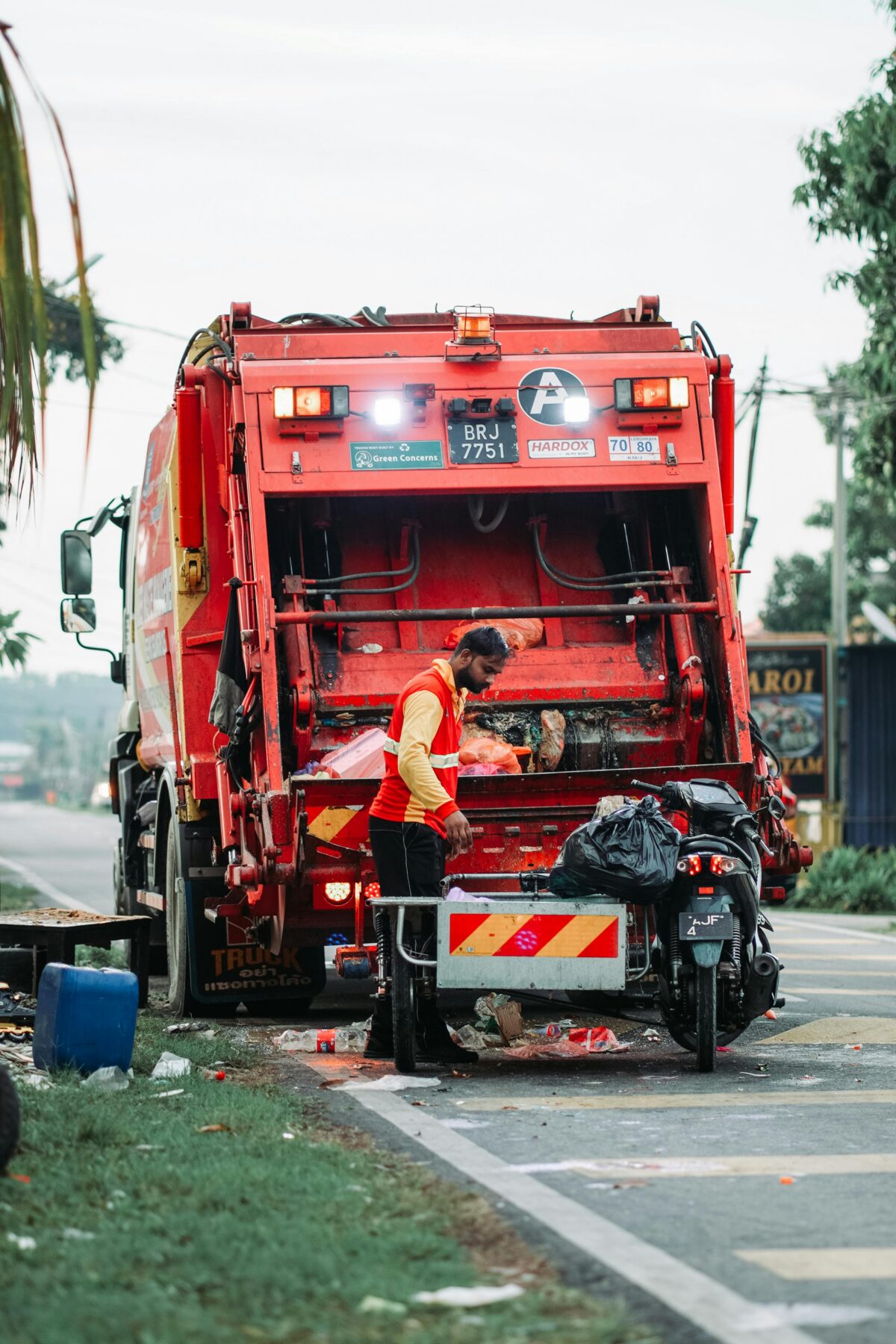
For decades, waste management and energy were treated as separate industries. One focused on disposal, the other on fuel production. That distinction may not hold for much longer.
Across India, municipal waste, agricultural residue, sewage sludge, food waste and industrial organic waste are increasingly being viewed as carbon feedstocks rather than disposal problems. Governments are encouraging the development of compressed biogas (CBG), waste-to-energy (WtE) facilities, biofuels and circular economy solutions to reduce landfill dependence while strengthening energy security.
In this emerging ecosystem, companies that either control access to waste streams or possess the technology to convert waste into usable energy could become important beneficiaries. Two listed companies that offer exposure to different parts of this value chain are Antony Waste Handling Cell and Praj Industries.
Anthony Waste Handling Cell: feedstock owners
Antony Waste Handling Cell Limited (AWHCL) is often viewed as a municipal waste collection contractor. However, a closer look reveals that the company controls access to significant volumes of India’s municipal solid waste through its collection, transportation, processing and landfill management operations. The company operates across multiple segments:
- Collection and transportation
- Processing
- Landfill management
- Waste-to-energy operations
- RDF (Refuse Derived Fuel) production
The company’s Kanjurmarg operations and waste-processing infrastructure position it as one of the few listed companies with direct exposure to India’s municipal waste stream.
Today’s solutions: In addition to revenue streams that include waste collection and transportation, waste processing etc, the company also has dedicated waste-to-energy initiatives through Antony Lara Renewable Energy and other project subsidiaries and has been increasing RDF output, effectively monetising waste beyond simple collection contracts.
Future possibilities: For Antony Waste, the longer-term opportunity may be considerably more lucrative. India generates approximately 160,000 tonnes per day of municipal solid waste, according to the Ministry of Housing and Urban Affairs Swachh Bharat Mission data. A significant portion still ends up in landfills, while only a relatively small share is processed for energy recovery. As policy support for waste-to-energy, compressed biogas and circular economy initiatives increases, Antony could potentially participate in several emerging value pools, including waste to electricity, bio-methanation plants etc.
The Ministry of New and Renewable Energy has identified waste-to-energy as an important pillar of India’s renewable energy strategy, which means that there is scope for a massive market as India’s waste management challenge becomes an energy opportunity. Growing urbanisation and rising waste generation provide a steadily expanding feedstock base for future energy projects. If waste increasingly becomes an economic resource rather than a disposal problem, the market may eventually begin valuing Antony Waste Handling Cell as a strategic feedstock aggregator within India’s circular carbon economy.
Watch our interview with AWHCL Chairman and MD here.
Praj Industries: the conversion engine
If Antony represents ownership of the feedstock, Praj Industries represents ownership of the conversion technology.
Over the years, Praj has transformed from an ethanol plant supplier into one of India’s leading bioeconomy and clean-tech companies. Its solutions span ethanol, compressed biogas (CBG), industrial biotechnology, wastewater treatment and renewable energy infrastructure, placing it at the intersection of decarbonisation, energy security and the circular economy.
Praj does not need to collect waste. Instead, it develops technologies that enable waste and biomass to be converted into valuable energy products. Over the past two decades, the company has built expertise across:
- Ethanol technology
- Second-generation biofuels
- Compressed biogas (CBG)
- Biomass conversion systems
- Industrial biotechnology
The company has emerged as one of India’s most visible technology providers for bioenergy and renewable fuels.
Today’s solutions: Praj’s compressed biogas platform, RenGas™, is designed to convert agricultural residue, organic waste and biomass into CBG. The company has already established commercial references in the sector and continues to expand its bioenergy footprint. Recent developments include:
- Joint venture with BPCL for CBG project development
- Commercial CBG deployments
- Technologies using rice straw and other agricultural residues as feedstock
- Continued expansion of its bioenergy technology portfolio
Future possibilities: The opportunity extends beyond biogas. Praj is actively building capabilities in several next-generation renewable fuel segments, like:
- SAF or Sustainable Aviation Fuel (The company signed an MOU with Indian Oil Corporation in 2023 to collaborate on a range of biofuels including SAF.)
- Marine biofuels
- Bio-hydrogen
- Renewable chemicals
- Advanced industrial biotechnology
As global decarbonisation efforts accelerate, these technologies could open significantly larger addressable markets than traditional biofuels alone.
The circular economy ahead
India’s transition to a circular economy is still in its nascent stages, but the overall direction is clear: waste is gradually being redefined from an environmental liability into a potential economic resource. Antony Waste and Praj Industries occupy two different positions in this emerging value chain. One manages and controls access to the waste, while the other develops technologies that can transform that waste into usable energy.
Whether the future belongs to compressed biogas, landfill gas, sustainable aviation fuel, bio-hydrogen or some combination of these pathways remains uncertain. But, the growing convergence of waste management and energy production is something that can’t be ignored — and these companies are worth keeping an eye on.
Sources
Antony Lara Renewable Energy Private Limited
PIB – Ministry of Urban and Housing Affairs: WASTE TO ENERGY PROJECTS