
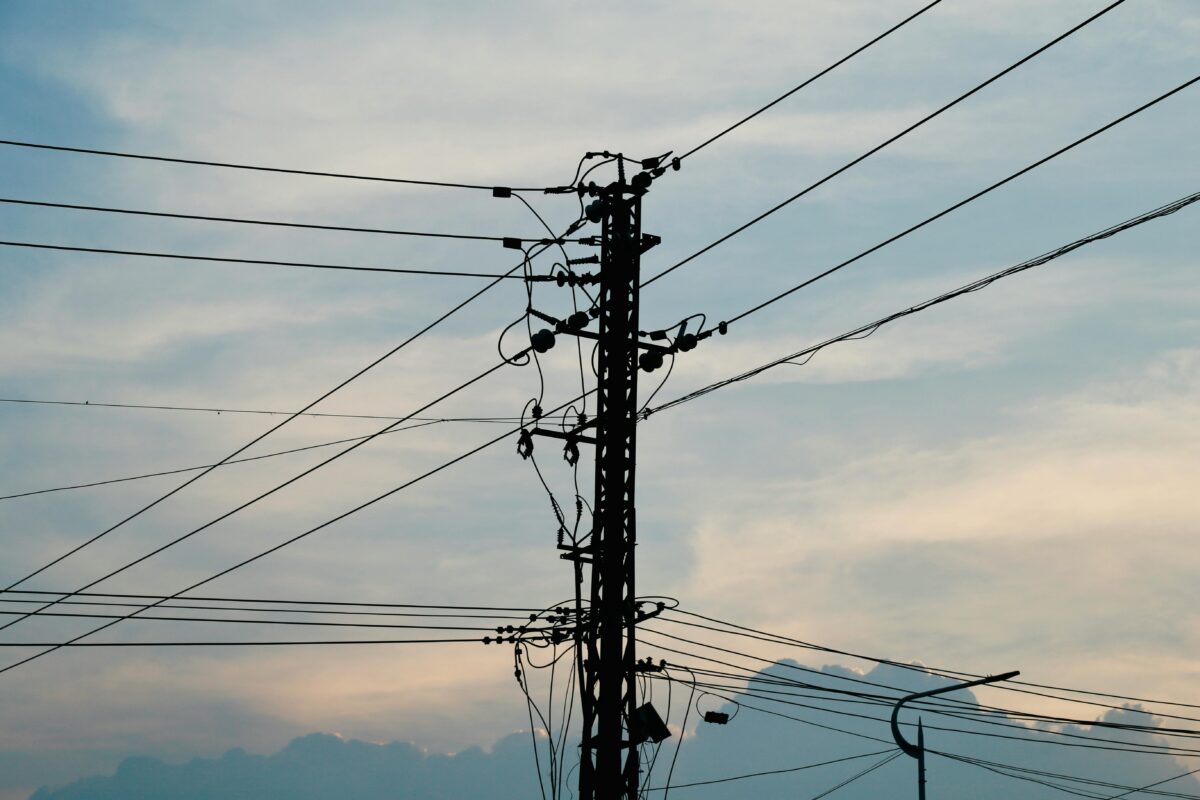
A recent report in Business Standard outlines how India is preparing for a future where renewable power generation becomes key — and so large that the existing transmission system may not be sufficient. The government is exploring 1150 kV UHV AC transmission lines, the highest AC voltage class commercially used anywhere in the world.
1150 kV kilo volt (kV) Ultra High Voltage (UHV) AC (alternating current) refers to an incredibly powerful electrical grid system that is used to transmit alternating current electricity across long distances at 1.15 million volts. If implemented, India would become only the second country after Kazakhstan to operate a transmission network at this voltage level.
The move is more than just a technical upgrade: it points to a long-term transformation in how electricity moves across India, especially as renewable energy capacity scales up rapidly across states and regions. Here’s a look at what this means, how these transmission lines work, and where smallcaps fit into the story. (Under SEBI or the Securities and Exchange Board of India, and AMFI or the Association of Mutual Funds in India, a smallcap company is any listed company that is ranked 251st and below based on full market capitalisation. Market capitalisation or market cap is the total market value of a company’s outstanding shares, calculated by multiplying its current share price by the number of shares outstanding.)
How power moves through India
India’s electricity network currently operates largely on:
- 220 kV transmission systems
- 400 kV transmission systems
- 765 kV extra high voltage networks
These systems transport electricity generated at power plants to cities, industries, and distribution utilities across the country.
However, India’s energy landscape is changing rapidly. Large renewable energy projects are increasingly concentrated in resource-rich regions like Rajasthan, Gujarat, Tamil Nadu and Ladakh. The challenge is that these renewable energy hubs are often located far away from major demand centres like Mumbai, Delhi, Hyderabad, Pune, and Bengaluru. This creates a need for:
- Long-distance bulk power evacuation,
- Lower transmission losses,
- Better grid balancing,
- Fewer transmission corridors.
Higher voltage allows significantly larger amounts of electricity to move through a single corridor. A 1150 kV UHV AC line can potentially transfer around 6-8 GW of electricity, depending on conductor configuration and system conditions. This is substantially higher than typical 400 kV or 765 kV systems.
A higher voltage also reduces current for the same amount of power transfer, which helps:
- Lower technical losses,
- Reduce conductor requirements,
- Minimise the number of parallel lines required
This matters because acquiring land and transmission right-of-way (RoW) has become one of the biggest bottlenecks for India’s grid expansion. India’s transmission expansion plans are already enormous. According to the National Electricity Plan, the country will require around 191,000 circuit kilometres of new transmission lines along with inter-regional transfer capacity rising from 119 GW currently to 168 GW by 2032.
Why this matters strategically
The move to 1150 KV UHC systems signals a shift from gradually adding conventional transmission lines to ultra-large-scale interstate power movement and balancing renewable energy across states and regions. As renewable energy penetration rises, India’s grid will increasingly need to:
- Move power dynamically between regions,
- Balance intermittent solar and wind generation,
- Evacuate electricity from remote renewable clusters into urban demand centres.
At the same time, India’s electricity demand itself continues to rise sharply. Recent peak power demand crossed 256 GW amid rising industrial activity, air-conditioning usage, and data-centre expansion. The proposal also includes stricter reliability requirements for critical infrastructure such as data centres. According to the draft framework discussed in the Business Standard report, this could lead to dedicated 220 kV and 400 kV evacuation infrastructure for urban data-centre clusters in cities such as Mumbai and Hyderabad.
This is important because data centres require:
- Uninterrupted electricity supply,
- Redundancy systems,
- Reactive power management,
- High-end transmission infrastructure.
That creates opportunities not only for transmission utilities, but also for EPC contractors, transformer manufacturers, conductor makers, automation firms, GIS (gas-insulated switchgear) suppliers, and specialised grid technology providers. For listed smallcaps operating in power transmission and grid infrastructure, this could potentially become a long-duration structural theme if execution gathers momentum over the coming decade.
Possible beneficiaries: transmission EPC companies
Transmission EPC (engineering, procurement, and construction) companies design and build transmission lines, substations, and grid evacuation infrastructure. If India moves toward higher-voltage transmission systems, these projects could become larger, more complex, and potentially earn these companies higher margins.
- Kalpataru Projects International: One of India’s largest transmission EPC players, Kalpataru Projects executes power transmission and distribution projects both in India and internationally. The company has extensive experience in high-voltage transmission corridors and large-scale infrastructure execution, making it a potential beneficiary of future grid expansion and interstate transmission projects. The company has completed 37,000+ kms of transmission contracts and delivered over 2.6 million tons of transmission towers worldwide.
- Bajel Projects: Bajel Projects focuses on power transmission EPC, including transmission lines, substations, and monopoles. It has a presence across transmission and distribution, international EPC projects with in-house design, and manufacturing of lattice tower, high masts, lighting poles, etc. Following its demerger from Bajaj Electricals, the company has emerged as a more focused transmission infrastructure player with exposure to India’s grid capex cycle.
- KEC International: Part of the RPG Group, KEC International is one of India’s largest engineering and transmission EPC companies. The company executes transmission projects globally and has expertise across high-voltage lines, substations, railways, civil infrastructure, solar, oil and gas pipelines, and more. The company is among the leaders in power transmission and distribution EPC companies in India, with this segment making up close to 60% of its business.
Possible beneficiaries: transformer manufacturers
Transformers are among the most critical and expensive components in high-voltage transmission systems. UHV-class transformers and reactors are technologically complex and significantly more expensive than conventional extra high-voltage equipment.
- Transformers and Rectifiers India Limited: Often referred to as TRIL, the company manufactures power transformers, distribution transformers, and reactor equipment for utilities and industrial customers. As India expands transmission infrastructure and renewable evacuation systems, demand for large power transformers could rise meaningfully.
- Shilchar Technologies: Shilchar manufactures transformers used in renewable energy, industrial, and power infrastructure applications. The company is a leading manufacturer of power & distribution transformers and electronics & telecom transformers in India. Shilchar serves the solar, wind, and hydel sectors and has increasingly benefited from renewable energy and data-centre related demand, where high-reliability electrical infrastructure is essential.
Possible beneficiaries: tower and conductor companies
Tower manufacturers and conductor suppliers form the backbone of transmission infrastructure. UHV systems require taller towers, advanced conductors, stronger insulation systems, and specialised hardware.
- Skipper Limited: Skipper manufactures transmission towers, poles, and engineering products used in power transmission projects. The company has been a supplier to domestic and international transmission infrastructure projects and could benefit from rising transmission tower demand.
- Diamond Power Infrastructure: Diamond Power Infrastructure manufactures conductors, power cables, and transmission products used across power infrastructure networks. Conductors become especially important in long-distance high-capacity power evacuation systems, giving them an edge.
What this means for the future
India’s proposed move toward 1150 kV UHV transmission may still be at an early stage, but it signals the scale of the country’s long-term power infrastructure ambitions, with the National Electricity Plan outlining around ₹9.15 trillion in transmission investments through 2032. While challenges remain around technical validation, manufacturing readiness, regulatory approvals, and investment, the proposal reflects how India is preparing its grid for a renewable-heavy future, making the power transmission ecosystem an important space to watch for in the coming decade.
Sources
Types of Transmission Lines in India | Power Grid Explained
Extra High Voltage (EHV) AC Transmission Explained | 400kV & 765kV Indian Grid
https://www.pib.gov.in/PressReleseDetailm.aspx?PRID=2114440®=3&lang=2
India’s Renewable Energy Capacity Hits 200 GW Milestone
Kalpataru Projects International Ltd share price | About Kalpataru Proj. | Key Insights – Screener
Bajel Projects Ltd share price
KEC International Ltd share price
Transformers & Rectifiers India Ltd share price | About T R I L | Key Insights – Screener
Shilchar Technologies Ltd share price | About Shilchar Tech. | Key Insights – Screener
Skipper Ltd share price | About Skipper | Key Insights – Screener