
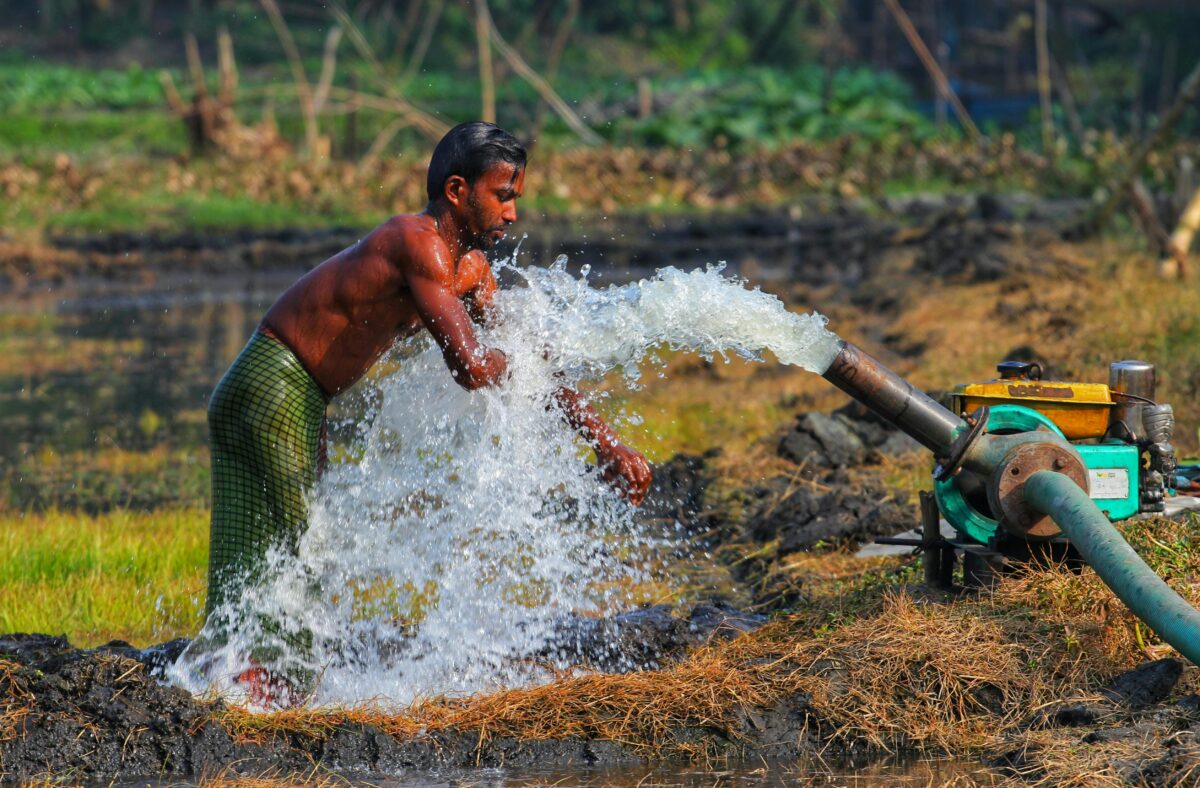
Summer often brings distinct cyclical consumption trends: travel, holidays, ice cream and more. Rising temperatures can also drive higher demand for products and services linked to cooling, water access, electricity usage, and rural infrastructure. In this series, we’re focusing on three key summer-linked themes in the smallcap space:
- Agro irrigation and water pumps
- Air conditioners and cooling products
- Power backup and related equipment
First up is agro irrigation and water pumps, a segment closely tied to agricultural activity, groundwater usage, and rising demand for efficient water management during the hotter months.
An overview of the pump industry in India
India has one of the world’s largest installed bases of agricultural pumps. Estimates suggest the country has roughly 30 million agricultural pump sets, creating a large recurring market for maintenance, repairs, replacements, and upgrades. Irrigation-related electricity usage also represents a significant share of India’s power consumption. Plus, irrigation pumps are often essential for farm operations and not a discretionary purchase — so as long as groundwater remains a key irrigation source, demand for pump infrastructure is likely to remain important.
The industry broadly operates across three major segments: submersible, monoblock and solar pumps. Submersible pumps are used for deep borewell extraction where groundwater levels are low. Monoblock pumps are typically used for surface-level water transfer and smaller irrigation applications. And solar pumps are a new fast-growing category supported by government subsidies and rural solarisation initiatives, using photovoltaic/solar panels to run the pump motor, eliminating the need for grid electricity.
What drives demand higher?
India’s peak summer (March–June) creates a clear and measurable demand trigger driven by water stress and farming needs.
- Falling groundwater levels: India faces structural groundwater depletion, particularly in agriculturally intensive states where irrigation demand remains high. According to NITI Aayog and World Bank studies, India is the world’s largest user of groundwater, with over-extraction closely tied to agricultural irrigation. As water tables decline during summer, farmers increasingly require deeper borewell extraction and higher-capacity pumps to access water.
- Pre-monsoon irrigation demand: A big portion of Indian agriculture depends on groundwater irrigation, especially during the pre-monsoon period when rainfall is low. Groundwater accounts for roughly 60–65% of irrigation in India, making irrigation pumps an essential input for sustaining crops during the hotter months. This seasonal dependence often drives stronger pump demand ahead of the monsoon season.
- Heat stress and increased water usage: Higher temperatures increase evapotranspiration (the process by which water moves from the land surface to the atmosphere) which increases crop water requirements. As temperatures soar and heatwaves intensify, crops require more frequent watering, increasing both pump usage and electricity consumption tied to irrigation. Over time, higher operating intensity can also accelerate wear and tear, creating a replacement-driven demand cycle for pumps and related equipment.
- Cyclical + structural demand: The demand is both cyclical and structural. Summer creates seasonal demand spikes due to falling groundwater levels, heatwaves and rising temperatures, pre-monsoon irrigation and increased pump usage. This makes irrigation pumps one of the more direct beneficiaries. Beyond summer, the industry also benefits from long-term structural drivers like a massive dependence on groundwater, rising irrigation needs, expanding rural electrification, adoption of more solar pumps, and government subsidies for irrigation infrastructure.
Smallcaps in focus
Pump usage is deeply embedded in India’s agricultural economy and rural infrastructure, making the category robust and more resilient compared to purely discretionary agricultural and industrial segments. As a result, several pump manufacturers and irrigation-focused businesses see heightened demand during summer, thanks to water stress and agricultural activity. And, some of the best-known names in this sphere sit within the smallcap segment.
Kirloskar Brothers, Pune, Maharashtra – the diversified industry giant: Kirloskar Brothers manufactures a wide range of pumps for agriculture, industrial systems, power plants, water supply projects, and infrastructure applications. The company has over 250 product categories, over 100,000 SKUs and serves 12+ industries and 2500+ customers. Its product portfolio spans both retail and large-scale institutional demand. The company’s key strength lies in its long operating history, established brand recall, and diversified revenue mix. Unlike more niche irrigation-focused players, it has exposure across multiple end markets and product applications.
Shakti Pumps India Ltd, Pithampur, MP – the solar irrigation specialists: Shakti Pumps manufactures submersible pumps, pressure pumps, solar pumping systems, and motors used across agriculture and water management applications. The company has emerged as one of the leading listed plays on solar-powered irrigation in India. Its biggest differentiator is its strong positioning in the government-backed solar pump ecosystem, particularly under the PM-KUSUM (Pradhan Mantri Kisan Urja Suraksha Evam Utthaan Mahabhiyan) scheme. It is one of India’s largest agricultural solarisation schemes, aimed at reducing farmers’ dependence on diesel and subsidised grid electricity and focuses heavily on solar irrigation pumps and decentralised solar power generation. Existing grid-connected pumps are solarised, farmers use solar power for irrigation and can export surplus electricity back to the grid. Shakti Pumps is a major beneficiary of subsidy-led adoption under the PM-KUSUM scheme. The company also benefits from an integrated manufacturing setup and a growing export presence.
WPIL Ltd, Kolkata, WB – water infrastructure experts: WPIL (Worthington Pump India Ltd., incorporated in 1952 by Johnston Pump Company Ltd.) is more infrastructure-oriented than agriculture-focused. The firm operates across pumps, water handling systems, and infrastructure EPC projects linked to irrigation, municipal water supply, and industrial applications. WPIL’s USP lies in its strong presence in large turnkey water projects and engineering execution capabilities. Compared to retail pump manufacturers, WPIL benefits more from long-cycle infrastructure spending and government water projects.
India’s summer season doesn’t just influence consumer spending on travel and hospitality, it also drives demand across essential sectors tied to water, power, and rural infrastructure. Among them, agro irrigation and water pumps stand out as one of the most direct beneficiaries of rising temperatures and increasing water stress, along with deeper structural trends such as groundwater dependence, irrigation expansion, and the growing adoption of solar-powered solutions.
Sources
Composite Water Management Index
India Groundwater: a Valuable but Diminishing Resource
Pradhan Mantri Krishi Sinchayee Yojana
Climate Change 2022: Impacts, Adaptation and Vulnerability
A Comprehensive Guide to Water Pumps: Submersible Pump vs. Monoblock Pump
Kirloskar Brothers Ltd share price | About Kirl. Brothers | Key Insights – Screener
Shakti Pumps (India) Ltd share price